The most important decision about a kickoff meeting gets made before anyone's in the room. It's the invite list, and most of us spend about four seconds on it.
You open the calendar, add everyone who might ever touch the project, mark them all as required and hit send. Sixteen people. One hour. Job done.
I did it that way for years. Then I started paying attention to who was actually in the room, and I realised I was running the same meeting for two completely different kinds of people.
The two people on every invite list
The first kind wants to be in every kickoff going. Their bit might not start for three months, but they want to hear it first-hand, see who's involved and get a feel for it. Leave them out and they'll feel sidelined, however good your reasons.
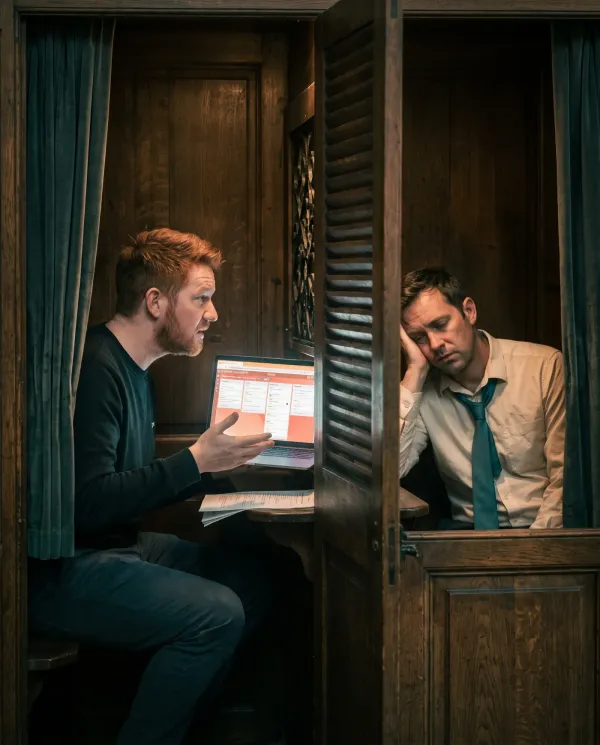
The second kind wants as few meetings as humanly possible. They'll think about your project when they need to think about it, and not a day earlier. Put them in a kickoff for work that's months away and you've taken an hour from something they needed to finish today. They'll sit there with their camera off, answering emails, quietly resenting you.
Both of them are right. And a blanket "required" invite gets it wrong for at least one of them every single time.
The word that fixes it
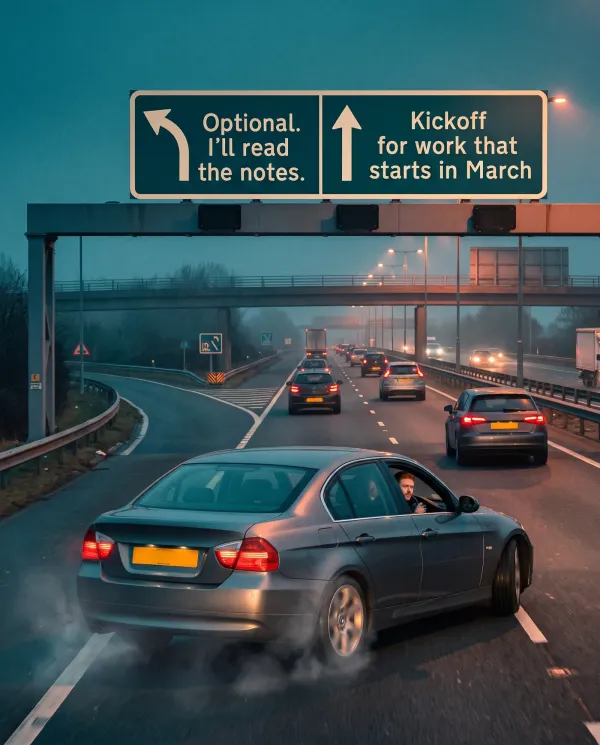
Optional.
It's been sitting there in the calendar the whole time. Hardly anyone uses it, and when they do they don't explain it, so people can't tell whether "optional" means "we'd love you there" or "we forgot about you until the last minute".
So I started doing two things.
First, actually thinking about the list. Who has to be there, because the meeting can't make its decisions without them? That's usually far fewer people than you'd expect. Everybody else is optional.
Second, telling the optional people why. One or two lines, in the invite itself:
"You're optional for this one. Your part doesn't start until the spring and nothing in this session needs a decision from you. Come if you'd like to hear the background first-hand. If not, I'll send the notes, and I'll book a proper session with you before your bit begins."
That's it. It takes a minute per person and it changes how the invite lands.
Why it works
For a lot of people, simply knowing that something is happening is enough.
What they're worried about is being caught out. Finding out in March that a project started in January and nobody mentioned it. An invite they feel fine about declining solves that. They know it exists, who's on it, roughly when their part comes up, and that nobody will think less of them for staying away.
The ones who want to come still can. Nobody's been shut out.
And the meeting itself gets better. A kickoff with eight people who all need to be there is a conversation. A kickoff with sixteen, half of them on mute, is a presentation with an audience.
What people get wrong about optional
It isn't a way to shrink the meeting by stealth. If you mark someone optional and then make a decision that affects them, you've turned a courtesy into an ambush. The deal is that optional people miss nothing that needs them.
It also isn't a ranking. I've seen "optional" read as "less important", which is why the explanation matters more than the label. The developer whose work starts in month four is not less important than the designer who starts on Monday. They're just not needed yet, and saying that plainly is a compliment to their time.
The kickoff after the kickoff
The promise in that invite matters as much as the invite. If you tell someone you'll bring them in properly before their part starts, do it. A short session, just them and the people they'll work with, when the detail is fresh and relevant.
That's a better kickoff for them than the big one would ever have been.
People don't look forward to kickoffs because of the agenda or the biscuits. They look forward to them when they've chosen to be there. Put the thought into the invite, and let them choose.
Keep reading
 Jamie Wright
 Jamie Wright