Working dyslexic in a words job
When I wrote about Blinkist, I mentioned in passing that I'm dyslexic, and that piece was really about one tool. This one is the whole picture, because there's a gap in what's written about dyslexia at work. Most of it is aimed at school, or written by specialists about people like me rather than by us. And almost none of it covers the specific comedy of my situation, which is that I'm dyslexic and my job is substantially words. Briefs, specs, contracts, release notes, a blog, and email, endless emails (or slack messages). I chose a words job with a brain that charges me a toll on words. Here's what that's actually like, where it started, and the one opinion about it that tends to surprise people.
Year 4
I couldn't recite the alphabet until I was in year 4. Sit with that for a second, because I've had decades to and it still lands oddly: the child who would grow up to write for a living, unable to get from A to Z at an age when his classmates had long stopped thinking about it.
My school's diagnosis was worse than the problem. They didn't think I was dyslexic, maybe because it's a mild form or that I'm not thick. My mum noticed what they didn't, and disagreed with the framework, and she did something about it: she moved me to a different school. I didn't understand at the time what was being decided on my behalf. I understand it now. Somebody looked at their child falling through a gap and refused to accept the gap's existence, and most of what follows in this article stands on that decision.
Mondays at the institute
The other thing that happened: every Monday, I left school early and got a bus into town to spend an hour at a dyslexic institute. Specific learning techniques, and hundreds of spellings rehearsed parrot fashion, over and over, until they were set in stone in my brain.
I want to be honest about what that was: it was drudgery. An hour of repetition while my mates were finishing the second half of a music lesson and they going home. But those words are still set in stone thirty-odd years later. Every one of them was paid for up front, in bus journeys and repetition, and they've held. When people talk about dyslexia purely in terms of what the brain won't do, they miss this part: what it will do, permanently, if you're willing to pay the toll early and in full.
The label followed me through school in the usual administrative ways. I got extra time in every exam, and never used a minute of it. I did once miss the final question on a geography GCSE paper entirely, which you'd think was the exact scenario the extra time existed for, and still came out with a B. Make of that what you will. I've chosen to make it a punchline.
What it's like now
Dyslexia isn't seeing letters dance, at least not for me, and it certainly isn't a measure of intelligence, though the number of times I've felt the need to say so tells its own story (see: "not thick", above). For me it's a tax on decoding. Reading works, but it costs more effort per page than it seems to cost the people around me, and the cost compounds. A dense statement of work at 9am is manageable. The same at 4pm, after six hours of screens, reads like it's been translated twice.
And for years there was a second job on top: hiding it. Triple-checking messages before sending, dreading the "can you just read this section out" moment in workshops. The masking cost more than the dyslexia. I'd put actual money on that.
The toolkit
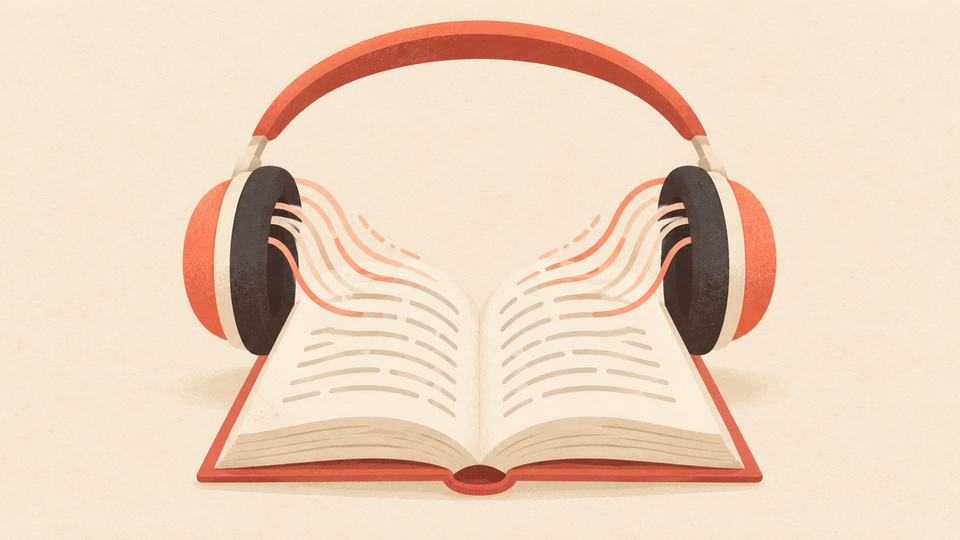
What actually works, in the order it changed things. Audio first: routing ideas in through my ears removes the decoding toll entirely, and modern text-to-speech means "read aloud" now hides in most tools you already own. Proofing by ear: having my own writing read back before it ships, because my eyes autocorrect my typos and my ears don't. Structure over prose: bullets, headings, short paragraphs, and the happy discovery that nobody has ever complained about receiving a clearer document. And selective honesty: "can you drop that in an email?" I stopped hiding it, nobody has ever pushed back, and the masking budget went back into actual work.
A note on the famous dyslexia fonts, since someone always asks: the evidence is mixed and they do little for me. Spacing and short paragraphs help more than any special typeface. Your mileage may vary, a phrase that applies to this entire article.
The bit that surprises people
Here's the opinion I'm told is unexpected from someone with the label: I have little to no sympathy for using dyslexia as an excuse for not spelling correctly. I care about never making a spelling mistake. Me. The year-4 alphabet child. And I don't have much time for people who can't be bothered to care, especially now, with the tools we have. Spellcheckers in everything, read-aloud in everything, AI in everything. The toll booth is still there for people like me, but now you have the correct change is in your pocket.
Let me be precise about the target, because it matters. This is not aimed at people who struggle. Struggling while caring is my entire biography; I paid for my spellings an hour at a time on Monday afternoons, and some people's versions of this are far steeper than mine. The line I'm drawing is between can't and won't bother. A label explains why something is harder. It was never a licence to stop caring whether it's right. And honestly, this stopped being about dyslexia a long time ago: like most things in life, I don't have a lot of respect for anyone who doesn't give a shit about what they do. The spelling is just where that shows up first in a job like mine.
Then AI changed the maths
I've written elsewhere about AI giving me back the ability to build software. The quieter, bigger story is the words. Long documents summarised, then interrogated in plain conversation until I understand them as well as any careful reader. Meeting transcripts that let me be present in the room instead of half-listening while panicking about notes. Drafting that starts from fragments, the way my head actually works. The reading tax hasn't been abolished, but for the first time in my working life it's negotiable, and I've stopped budgeting my day around it. If you're dyslexic and treating AI tools as a nice-to-have: they're your category-defining assistive technology, wearing a productivity costume.
For the managers, and the child on the bus
To managers: statistically you have dyslexic people on your team right now, mostly undisclosed, and the accommodations that transform their output are embarrassingly cheap. Written follow-ups to verbal briefings. Documents before meetings, not during. Never "let's go round the room and read a section each". None of it needs a disclosure or a policy. It's just clearer communication, which helps everyone you manage and quietly changes everything for a few of them.
And to the child getting the bus into town on a Monday afternoon, learning his hundredth word parrot fashion while his mates played out: it's worth it. All of it. The words stay set in stone, the toll gets cheaper, the tools get extraordinary, and one day you'll write thousands of words a week on purpose, for fun, and care about every spelling in them. Not because anyone made you. Because giving a shit turned out to be the whole point.